

Diwali the festival that fills our homes with golden light, laughter, and the comforting scent of mithai is meant to be about togetherness and joy. Traditionally, it’s an evening of glowing diyas, homemade sweets, heartfelt hugs, and long conversations over chai. But lately, something’s changed.
Our Diwali parties have started looking suspiciously like wedding receptions. There are themed invitations, matching outfits, catering counters longer than railway platforms, and décor that would make a bride jealous. Somewhere in all that sparkle, the simplicity of Diwali seems to have dimmed.
This year, let’s bring back the warmth, not the overwhelm. Here’s how to host a stylish, unforgettable Diwali celebration that feels festive not formal.
The Great Diwali Party Dilemma
Over time, Diwali gatherings have turned into full-blown production shows. What began as a few lights and laddoos with close friends has become an unspoken competition: who can host the biggest, brightest, and most Instagram-worthy party?
There are 12-course buffets, celebrity DJs, floral walls taller than your front door, and guest lists that could fill a banquet hall. I once attended a “Diwali dinner” where I needed Google Maps to find the dessert table.
But here’s the catch: when the focus shifts to grandeur, the joy gets buried under logistics. The hosts run around managing caterers and seating charts, while guests spend the evening searching for familiar faces in a crowd. The laughter feels diluted, the warmth lost.
Rule 1: Keep the Guest List Human, Not Herculean
Diwali should feel like coming home, not checking into an event venue. So, let’s trade chaos for connection with a few simple but game-changing rules.
The first secret to a Diwali that doesn’t feel like a wedding? Keep the guest list short enough to remember everyone’s names.
Diwali is about bonding, not networking. Yet, somehow, our parties have started looking like LinkedIn conventions—acquaintances from five jobs ago, your cousin’s roommate, and that one friend’s friend you barely know.
A crowded house kills conversation. When half the people are introducing themselves instead of reminiscing, the warmth disappears. Instead, invite those who truly light up your evening close family, your inner circle of friends, and the few people who matter most.
Fewer guests mean less stress, more meaningful moments, and the kind of laughter that lingers after everyone’s gone home. Think of it as quality over quantity a Diwali you’ll actually remember, not just document.
Rule 2: Let Décor Add Glow, Not Glare
When did Diwali décor start resembling red-carpet setups? Between balloon arches, mirror backdrops, and LED tunnels, we’ve somehow forgotten that all we really need is light.
This year, take a breath and simplify. A few well-placed diyas, fairy lights tucked into glass jars, and marigold strings on trays can create magic without the migraine.
Brass or ceramic serveware not only looks elegant but doubles as décor. A cluster of candles on a tray, fresh flowers in a kansa bowl, or even small rangoli accents can instantly make the space feel festive and grounded.
Remember: your décor should whisper warmth, not shout spectacle. Guests should feel at ease, not like extras on a movie set. The goal is ambience, not applause.
Rule 3: Food Should Comfort, Not Compete
Let’s be honest—some Diwali spreads look like the finals of MasterChef India. Twenty dishes, fifteen desserts, and still someone’s complaining there’s no kachori.
Hosting doesn’t need to feel like running a buffet marathon. Instead, focus on a thoughtfully curated menu. A handful of well-made dishes beats a mile-long feast any day.
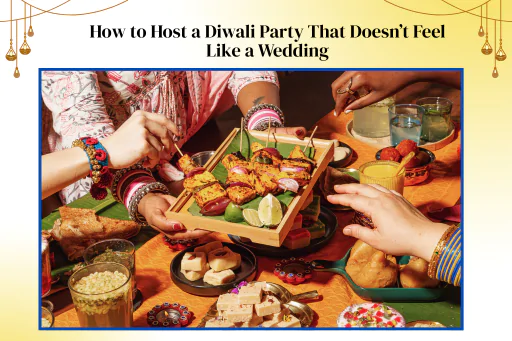
Pick a few crowd-pleasers—say, paneer tikka, dahi puri, chaat, and a signature sweet. A perfectly crisp samosa or ghee-laden peda will always be remembered longer than 10 kinds of curry that blur together.
Presentation adds charm—serve in handcrafted platters, small ceramic bowls, or thalis with a festive touch. If it looks good and tastes great, you’ve nailed it.
Food should invite people to gather, not exhaust them. Keep it simple, seasonal, and soul-satisfying.
Rule 4: Music That Sets the Mood, Not a DJ Booth
Music is what ties the whole evening together—it’s the invisible thread that defines the vibe. But there’s a difference between a lively playlist and turning your living room into a club.
Skip the blaring remixes and go for tunes that feel nostalgic and warm. Think old Bollywood melodies, soft instrumentals, or acoustic festive playlists that float gently in the background.
Music should make conversations easier, not impossible. The idea is to create rhythm, not racket—enough to make your guests sway, not scream.
Let your playlist carry the feeling of Diwali: comforting, joyful, and full of heart.
Rule 5: Dress to Impress, Not to Stress
Here’s an unpopular opinion: not every Diwali party needs to look like a fashion show. Yes, it’s festive—wear something special—but that doesn’t mean your guests should need a tailor, a stylist, and a therapist before showing up.
Set a tone that’s celebratory but relaxed. Suggest “elegant festive” instead of “Bollywood glam.” Encourage comfortable elegance—light silks, cottons, or subtle embroidery that allows people to actually sit, eat, and laugh freely.
As the host, lead by example. If you’re at ease, everyone else will be too. After all, no one remembers the designer outfit that made it impossible to breathe—but they will remember how good it felt to be in your home.
Rule 6: Activities That Feel Fun, Not Forced
Every Diwali party needs a touch of playfulness—but please, let’s retire those awkward “guess the movie name” games that feel like office icebreakers.
Instead, bring in light-hearted, natural interactions:
- A DIY diya-painting corner for both kids and adults.
- A Rangoli challenge where creativity wins over precision.
- A card table (because what’s Diwali without a little luck?).
- Or a “Mithai Exchange”—everyone brings one sweet, and everyone leaves with a mix of them all.
Even storytelling can be magical—ask guests to share their most memorable Diwali moment or a family tradition. These small touches turn guests into participants and the evening into a shared memory.
Fun should flow organically. The best activities are the ones people join willingly, not out of politeness.
Rule 7: Gifting That Feels Heartfelt, Not Heavy
Ah, Diwali gifting—the part that often turns into an emotional and financial tug-of-war. Every year, the hampers seem to grow larger and the meaning smaller.
Here’s the truth: the best gifts are thoughtful, not expensive. A box of homemade sweets, a beautifully packed candle, or even a handwritten note saying “Thinking of you this Diwali” carries more weight than a giant basket filled with things no one uses.
Keep it personal. If you’re hosting, small keepsakes like organic teas, artisanal chocolates, or eco-friendly diyas can delight guests without overwhelming them.
The idea is to show gratitude, not compete. Gifts should reflect care, not pressure. Because Diwali, at its heart, isn’t about giving things—it’s about giving love.
Bringing It All Together: Charm Over Chaos
When you strip away the noise, Diwali’s magic lies in its simplicity. It’s in the soft flicker of diyas on your balcony, the laughter echoing through familiar rooms, and the sweetness of that first bite of jalebi shared with someone you love.
A great Diwali party doesn’t require grand setups or hundred-person guest lists—it just needs intention. So, this year, skip the “wedding sequel” and bring back what makes Diwali truly special: connection, comfort, and light. Light diyas, not spotlights. Share sweets, not stress. And remember—the best Diwali memories aren’t made in perfect pictures, but in imperfect, joy-filled moments that linger long after the lights go out.